Thursday, January 28, 2016

Wordless Wednesday: Clicker Expo 2016 Reno!

The weekend started with a day of chicken camp taught by Terry Ryan. IT.WAS.SO.MUCH.FUN.

Chickens in dog kennels. Very appropriate for us :)
Me and my hen. She lays white eggs.
It's So Fluffy!
Terry Ryan, me and Henrietta.

Then three whole days of non-stop learning and laughing. I can't even describe the amount of knowledge I gained or fun I had learning from the best of the best.

My daily Expo set-up :). I love learning!
Minnesota 2015 KPA Grads!!
Lori Stevens did some great demos with FitPaws and the Klimb.
My FAVORITE lecture. Hannah and Laurie were so great
and I am so excited to put this in action going forward!!
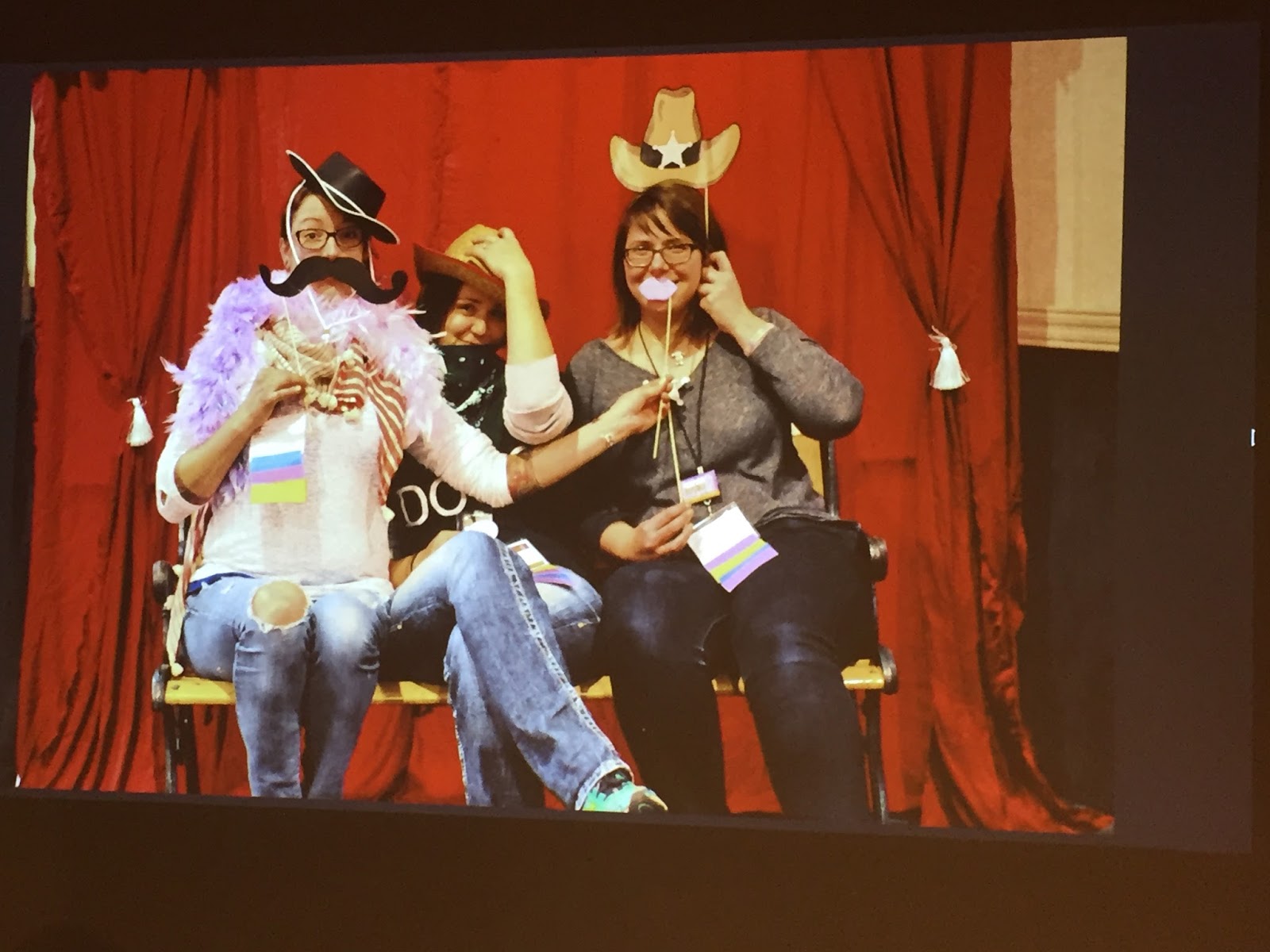
Photo booth fun with Hannah and other Fenzi students.
This was a great networking event!
YAY! This is so awesome to be a part of!!
Our brains hurt....
My suitcase was stuffed FULL.
I might have a slight KONG addiction...


I.CAN.NOT.WAIT.FOR.NEXT.YEAR!

Have you ever been to a Clicker Expo?

Monday, January 18, 2016

A Beautiful Walk In The Neighborhood...

Ah yes, the elusive Loose Leash Walking (LLW) behavior :). The one behavior everyone wants but has such trouble gaining!

I taught Rookie to walk between my legs as well.
This can help with loose leash walking :).

About 2 years ago (I can't believe it's been that long ago!!!) I did a series on the test items for the CGC test and covered LLW. You can find my LLW post HERE. I covered in that post the few different techniques I have used in teaching this behavior to my dog. I have since learned yet another! :)

Connect the dots is a lot like what I already do, but it gives you specific points to remember to reward at, which is always helpful!

Here are the steps:
Set up 12 or more 'dots' (whatever small objects you can use) in a straight line, about 4 feet apart. Practice this indoors or in the backyard (if you don't live in the midwest in January!) with minimal distractions. Try it without a leash too!!

  • Click as you approach the first dot. Stop, treat, then go on.
  • Click as you approach the second dot. Stop, treat, then go on. Repeat for remaining dogs, then turn and repeat the line of dots again.
  • Remove three dots from different parts of the line.
  • Repeat the exercise, cueing 'let's go' just before stepping forward toward the next dot.
  • Remove two more dots and repeat the exercise.
As you progress, set up your dots but space them irregularly. Once you are successful at several repetitions of that, add some MILD (let me repeat MILD) distractions, like toys or obstacles, on your dots course. Once you are successful at several repetitions of that (and remember to move around your dots as you do new repetitions), then begin practicing in slightly more distracting environments. I also like to change up what I am using as dots, and as you move into the 'real world' situations you can set your dots as landmarks (like mailboxes, or driveways, or trees, or hydrants, etc). You need to remember to introduce new distractions in a slow and controlled manner :). This is generally where people - exposing their dog to a high level of distraction and expecting too much duration between clicks.

As you make sessions incrementally harder keep these points in mind:
  • Do a quick warm-up by cueing 'let's go' and clicking and treating as the dog maintains a loose leash for 5 and then 10 pages, down the length of the room or around the perimeter.
  • When adding in distractions, watch for the instant the dog notices the distraction, and click and treat if the leash remains loose. You want to manage distractions at a level at which your dog can succeed.
  • Reward not just with food but sometimes with a few moments of play, or with permission to investigate a distraction (tell the dog 'go sniff' then stop and allow the dog to sniff and explore, or to pee :); repeat alternating between controlled walking and 'rest stops').
  • When you're increasing duration/distance, try to count steps and reward at 10, 20, 30, 40 steps, etc. But remember to alternate between fewer steps and more steps (don't always just make it harder!!).
The goal is to continue building the skill of loose leash walking in new environments, for a longer distance and duration, and in the presence of increasing distractions.

I will also give yet another source that I LOVE - Denise Fenzi! Yes, again :). Check out her post on LLW (she gathered some great techniques from quite a few sources). I love this excerpt from her post: 
Good luck! The name of the game with LLW is persistence. You mean it. You will not proceed forward if your dog is pulling. Before you head out the door, make a decision if this is a walk that you will manage pulling or a walk where you will train the skill of LLW.
Once you feel good about your LLW, don't get complacent! SLOWLY increase the challenge level for your dog. Start in your house! Can your dog LLW through your house, even there are other people there? Other dogs? Low value food on the counters? High value food on the counters? The trick to reliability is to add distractions, over time, and set your training up so that your dog will experience success. Remember, your dog has to learn what you want. Stay calm, positive and patient.
Just like a human child, they will get there but there are no shortcuts to training.
Monday is great for LLW but for heeling
(which is more precise) she's a forger!


How far are you in your training methods? Which method is your favorite? Tell me about your experiences!!


Friday, January 15, 2016

Animal Madness {book review}

Animal Madness: How Anxious Dogs, Compulsive Parrots, and Elephants in Recovery Help Us Understand Ourselves


Synopsis
Laurel Braitman spent years studying animals, first as a biology major and then later as a PhD student at MIT. But it was her own dog Oliver that taught her something new about animal behavior. Oliver snapped at flies that only he could see, suffered debilitating separation anxiety, and may even have attempted suicide. As she struggled to help Oliver feel more at ease, Braitman began to suspect that nonhuman animals can lose their minds in ways that look strikingly like human mental illness. Thankfully, most of us can heal.

As a historian of science, Braitman was compelled to dig through historical archives to uncover more than a century's worth of animal insanity tales. She also traveled the world in search of emotionally disturbed animals and the people who care for them and discovered plenty of evidence of recovery: parrots that learn to stop compulsively plucking their feathers, traumatized elephants that form soothing friendships, and great apes that benefit from human psychiatrists. She found that these animals move on the same way we do: with love, with medicine, with behavior therapy, and above all, with the knowledge that someone understands why they suffer and what can make them feel better.

Showing how humans have interpreted the unquiet minds of animals, starting with Darwin's thoughts on his own dejected dogs, Animal Madness makes a passionate argument for seeing how their minds and ours are inextricably linked. Animals are us, it turns out, and they have lots to teach us about how to keep our sanity.

My Thoughts
I loved this book and found it totally fascinating. Animal mental illness has intrigued me since fostering Ice and I've read through lots of material in regards to this topic. Most of the stuff is rather dry :), but while this book was extremely well documented and scientifically grounded, I thought it was still easy to read and understand. Braitman personalized the book with her own experiences with her dog Oliver and collected lots of diverse anecdotal evidence from professionals in various animal fields. It covered the range of common mental illnesses such as depression, suicide, anxiety, and post-traumatic stress disorder.

I recommend this book for anyone that lives with or thinks about animals :). As Braitman says in her conclusion, there is a great deal that the animal mind can teach us about our own minds. And beyond that, there is an immense call for changing the way we view and treat animals. It's always about treating one another as we would want to be treated :).


Check out the other books I've reviewed:
Dog is My Co-Pilot
When Elephants Weep
Scent of the Missing
Tell Me Where It Hurts
Little Boy Blue
Pawprints of Katrina
Hit By a Flying Wolf
What the Dog Knows
A Small Furry Prayer
Until Tuesday
The Dogs of Babel
Zoo Story
The Soul of All Living Creatures


Wednesday, January 13, 2016

Wordless Wednesday: Story of My Life

How it usually goes....

What we aim for....well except for their lovely expressions LOL

How many 'takes' does it usually take you to get the picture you were hoping for?


Friday, January 8, 2016

Ding-Dong, Who's Here?!? Door Manners!!

So I had a recent comment about improving canine manners at the door :). First, I will say at my house my dogs are babygated away from the door so they are not allowed to practice bad manners. I employ this management technique and haven't actually done much door manner training, mostly because we really don't have visitors. This solution fits our lifestyle and works for us :), but it might not work for you!

When training door manners, I love using the 'Go to Mat' behavior. It's easy to use, universal (you can take that mat anywhere so can use at any house), and very black/white for your dog. But with this post I am not going to reinvent the wheel :). I'm going to take the lazy approach if you will, LOL! There are two AMAZING resources already for this behavior and they cover everything that I would write anyways.

Rookie demonstrating his Mat behavior
Please, please, please do yourself a favor :) and check out Denise Fenzi's Pet Dog Blog (just in general because it has great information!). But she does have a post up about teaching the 'Go to Mat' behavior:
Teaching your dog to “go to mat” is one of the easiest ways to solve an enormous range of typical puppy behaviors, ranging from jumping up on guests, to excessive barking (dogs don’t like to bark when they lie down), … Continue reading →
The other resource is a video from Dr. Sophia Yin. The Treat & Train (which is now called the Manner's Minder) can be a great tool in helping to teach the 'Go to Mat' behavior and getting them to stay there through some of the harder distractions (like someone at the door!). You still have to progress to that level of distraction through all the steps but it does help it move quicker in general. Check out her video here. We have a Manner's Minder and we LOVE it.

And that's that :). LOL, that's like the easiest blog post I have ever written (probably because I didn't actually write much!!). Happy Friday! :)

Have you trained a 'Go to Mat' behavior? If so, how/when do you use it? If you haven't, give it a try and let me know how it goes!


Wednesday, January 6, 2016

Monday, January 4, 2016

Train Your Dog Month!


Happy New Year! :) It's the sixth annual National Train Your Dog Month hosted by the Association of Professional Dog Trainers (APDT). This year the APDT is focusing on everyday manners all family dogs should acquire. And hey that's a great a focus! :)

The APDT has a great program called C.L.A.S.S. (Canine Life and Social Skills) that covers all those everyday, basic manners companion dogs should have. C.L.A.S.S. is a three-level evaluation for dog owners to demonstrate the real-life skills of their dogs, as well as a knowledge assessment of their own understanding of basic dog handling and care. I have actually modeled my group manners classes after the C.L.A.S.S. program because I think it's a great comprehensive list of behaviors dog owners should strive to achieve. They have a general webinar giving an overview of each Evaluation test item and covers the Rules and Guidlines, you can check it out here.

I LOVE National Train Your Dog Month, but then again that's my world every month :). But this event does help promote the importance and benefits of training dogs to become happy and healthy companions. Again, pretty much my ambition every day! But too many dogs are turned into animal shelters each year for behavior and training issues that could be easily solved with proper socialization and positive, gentle, science-based methods of training. So hopefully this helps get the word out about training to more people! :)

The APDT will be offering a variety of free webinars with tips and tricks for teaching the 'basics' - sit, down, stay, wait, coming when called and walking on a loose leash. 

Let me know if you find any of them helpful! If there are any training topics you'd like me to cover, please post below! :)


About the Association of Professional Dog Trainers
The APDT is a professional educational organization of trainers who are committed to becoming better trainers through using positive, dog friendly methods based on sound scientific principles. With over 6,000 members worldwide, the APDT provides professional dog trainers with a respected and concerted voice. The APDT promotes caring relationships between dogs and people and works to increase public awareness of dog-friendly training techniques. For more information, visit the website at apdt.com.


Wednesday, December 30, 2015

Wordless Wednesday: Motivation

Rookie's favorite reward is getting a 'bite'. It's his highest motivator - even better than food :). He considers the sleeve the best toy ever!

Here's a recent video of his first session learning to go around a blind (for the blind searches in IPO1). He'll do pretty much anything for a bite :).


What reward brings out your dog's highest motivation?


Monday, December 28, 2015

Christmas Loot!

Happy Holidays!

Whew, I can't believe the year is basically over! Every year I marvel how fast time goes and every year it goes faster. Damn that cycle :(.

Well the good news about this time of year - Christmas loot! :) The dog were quite happy with their haul this year, lucky pooches. They have generous pet parents...LOL.

FitPaws, toys, and treats :). Not pictured: Bourbon's heating pad,
5 other boxes of Blue Dog Bakery treats, and Monday's pajamas :)


The name of the game this coming year will be FITNESS :). I'm sure the dogs are super excited LOL. But we should have lots of fun utilizing the FitPaws accessories and adding to our collection as the year progresses. This should help/add into all the work I am doing with Rookie on body awareness :). And for Bourbon we are working on keeping some muscle tone in his rear end - I hate watching him get old :(.
We are so excited to use these leashes! Monday got the short end
of the stick and you can't really see her name, but I am going to see
if I can have it outlined so that it's more visible.


My parents got us these amazing leashes made by UpCycled Hound. They are repurposed Karate belts :). Each pup got a personalized leash (coordinated in their favorite color of course) and I got one with my business name! I'm in love with the extra length (they are 8-10') and the wider width. I might be a bit of a leash 'collector.' :)


What was your dog's favorite Christmas present? And if you're like me, what was your favorite dog-related present? :)


Monday, December 21, 2015

Dog Parkour!

Rookie showing 4-feet-on.
Dog Parkour is a new 'sport' that is quickly spreading across the US. Most people are familiar with 'human' parkour - a physical discipline in which people move through their environment and conquer obstacles in their path by climbing, balancing, jumping, running, vaulting...you get the idea :). So what is dog parkour? Taken from the International Dog Parkour Association's website: 'Dog parkour, sometimes knows as urban agility, is an activity based on the same principles. It is a challenging, but fun, physical activity in which the dogs learn to interact with their environment. Just like in the human version, in dog parkour we work on ways to conquer obstacles, such as climbing, balancing, and jumping. Dog Parkour is a non-competitive event, but it is a titling event.'

And Rookie just received his Training Level title: PKD-T!

Woot, woot :). In order to receive a title, you have to submit videos of your dog performing each of the behaviors called for in each title level. Here is Rookie's Training Level Title video:


The Training Level (Parkour Dog in Training PKD-T) consists of these behaviors:
*Dog must complete one obstacle outside

  • 4 feet on: Dog approaches an obstacle and places all four feet in no particular order onto the obstacle in a safe manner and remains on the obstacle for at least 5 seconds. Two different obstacles must be used, and at least one much be at least elbow height. Be sure that we can see the dog getting on and off each obstacle.
  • 2 feet on: Dog walks up to obstacle and places two front feet onto the obstacle and remains on the obstacle for at least 5 seconds. The object must be at least elbow height.
  • Under: Dog crouches down and passes under an obstacle shorter than head height.
  • Through (between two obstacles): Two obstacles must be less than dog's body length apart from each other. The dog must pass through these two obstacles with confidence.
  • In: Dog must safely walk into or hop into an obstacle that has four sides. All four feet must remain in the obstacle for 5 seconds.
  • Balance: Balance across an obstacle that is twice shoulder width or narrower and 3 times longer than dog. Dog must have all four feet on obstacle and safely walk across it.
  • Creativity: Owner chooses and demonstrates two different parkour behaviors that can be done with a single obstacle. For example, a dog may do an under and an on using the same obstacle. The behaviors must be parkour behaviors and not just tricks.


Seriously, can it get any cuter than a dog in a box?!?!

We're off to work on our Novice Title behaviors :)!!

Have you heard about Dog Parkour? Is it something you would be interested in trying with your dog?


Monday, September 28, 2015

Dog Play: Dog Parks

Oh Dog Parks. Still a controversial subject with passionate people on both sides of the fence :). Before I delve into my spiel, I do want to say that I do not frequent our local dog park. I just won't take the chance with my dogs since you never know what other dogs will be there.

But lots of people love going to dog parks and their dogs do just fine. I'm not judging :), there are good and bad things from both sides.

Advantages
Dog parks are safe, fully fenced places, where people can exercise their dogs. Hey it's a place where dogs are actually welcome! :) And they can be an excellent resource for asshole adolescent dogs that have too much energy and no place to put it. Dog parks also facilitate socialization with a variety of breeds and play styles. Many also function as socialization centers for dog owners themselves!


Many people already know the advantages - that's why they use dog parks and love them! But there are many disadvantages that can cause behavioral problems that many people don't realize are related to their dog park visits. I'm going to delve into a few here in a minute, but I don't want it to seem like I minimized the advantages. There are two sides of the coin and for every dog and situation it's different. I'm just going to focus on the disadvantages here because many owners don't realize how dog parks are unintentionally reinforcing behaviors they are trying to get rid of.

Disadvantages
I read a great article by Trish King and Terry Long <Dog Parks: The Good, The Bad, and The Ugly, 2004> describing the following disadvantages (and many more that I am not going to cover). Here is my summarization!

Dog parks can cause both short-term and long-term behavioral problems. And often, dog owners unknowingly contribute to the problems because they don't interpret correctly what their dogs are actually doing and learning. Here are several issues I have seen crop up from dog park usage...

Frustration Aggression
Ah, the canine temper tantrum :). Leash frustration can be an offshoot problem from the dog park for several reasons. It often begins when a dog is so excited at the prospect of playing that they pull their owner all the way to the park, lunging and barking (sometimes even in the car for blocks on their way to the park). The upset owner pulls back and yells at the dog (thus increasing arousal). By the time the dog gets to the park, they are all fired up for something physical - like a fight - and often dogs (and their people!) are gathered by the entrance to 'welcome' new dogs.

Leash frustration also occurs out on regular neighborhood walks, usually because dogs that frequent dog parks mistakenly believe that they can meet any other dog they see. Once again, they tend to pull on the leash and the owner yanks back, building frustration. The dog appears aggressive, so other owners pull their dogs back in fear and it turns into a vicious cycle. Eventually, leash frustration can lead to real aggression. Owners in this situation are generally very confused because their dogs are so good off leash and so bad on leash.

Learned Disobedience
When owners are not careful, dog parks quickly teach a dog that the owner has no control over them. I'm sure we've all seen that owner following their dog, calling frantically as the animal stays just out of reach, looks at them from afar, or just totally ignores them. And this is after the dog has learned to bark hysterically in the car all the way to the dog park, then pulled the owner through the parking lot, and finally bolted away from them as soon as the leash is off. :) I don't know about you, but that's not really what I want my dog to learn!

Owner Helplessness
When I think about this, it always makes me sad. When owners allow other dogs to play overly rough (body slamming, rolling them, etc.), their dog learns that their owner cannot keep them safe from harm. Remember the dog's perception of safety matters, not the owners. This can be difficult for owners, who dismiss their dog's fear since they 'know' the other dog(s) mean no harm. A dog that is chased or bullied by another dog is not only learning to avoid other dogs, they are also learning that their owner is completely ineffective. This can have a serious impact on the human-dog relationship.

Trauma
This is the disadvantage that most everyone has been cautioned about. A traumatic experience can leave a lasting impact on a young dog. A puppy or adolescent who is attacked could very well show aggressive behaviors after the incident. Sometimes a young dog can be traumatized by situations the owners think are minor or are not even aware happened. This is always a risk you run when frequenting dog parks.

The Take-Away
Owners play an important in how their dog's dog park experiences go and sadly, many don't accept the responsibility they should. I've seen lots of owners not paying attention to their dogs and many have no idea what proper behavior actually is, or what a dog may be signaling to another dog. Some defend their dogs when the animal exhibits inappropriate behavior, while others overreact to a normal interaction where one dog discourages the attention of another. And as I've already mentioned, most owners have far less control over their dogs than they believe.

So what can you do? These are things I would do and recommend:
  1. Educate yourself on appropriate dog-dog interactions
  2. Always, always, always pay attention to your dog :)
  3. Stick up for your dog
  4. Instill training for impulse control and attention (for on the way to the park, entering the park, while you are enjoying the park, and exiting the park)
Here is a great list of Do's and Don'ts from Trish King and Terry Long:

Do's
*Check out the entrance before entering to make sure dogs aren't congregating there
*Pay close attention to your dog's play style, interrupting play if necessary to calm your dog down
*move around the park so that your dog will need to keep an eye on you
*remove your dog if the dog appears afraid
*remove your dog if it is bullying others
*respect your dog's wish to leave
*leave special toys at home to avoid resource guarding problems

Don'ts
*allow your dog to enter the park if there is a 'gang' right next to the entrance
*believe that dogs can 'work it out' if you just let them do so
*congregate at a picnic table or other area and chat with dog owners who are not watching their dogs
*let your frightened dog remain in the park and hope things get better
*listen to other attendees in the park who may not understand your dog's needs
*assume a dog is aggressive when it is only trying to communicate its discomfort


Snoopy's Dog Blog


Friday, September 18, 2015

The Soul of All Living Creatures {book review}

The Soul of All Living Creatures: What Animals Can Teach Us About Being Human

Synopsis
As an emergency room clinician four years out of veterinary school, Dr. Vint Virga had a life-changing experience: he witnessed the power of simple human contact and compassion to affect the recovery of a dog struggling to survive after being hit by a car. Observing firsthand the remarkably strong connection between humans and animals inspired him to explore the world from the viewpoint of animals and taught him to respect the kinship that connects us.

With The Soul of All Living Creatures, Virga draws from his decades in veterinary practice to reveal how, by striving to perceive the world as animals do, we can enrich our own appreciation of life, enhance our character, nurture our relationships, improve our communication with others, reorder our values, and deepen our grasp of spirituality. Virga discerningly illuminates basic traits shared by both humans and animals and make animal behavior meaningful, relevant, and easy to understand. Insightful and eloquent, The Soul of All Living Creatures offers an intimate journey into the lives of our fellow creatures and a thought-provoking promise of what we can learn from spending time with them.

My Thoughts
This was a beautifully written book that reminds us of the importance of animals in our lives. Virga uses anecdotes, fables, and parables to portray what he has learned about animal behavior. Each of the chapters relates a story that ties into that heading and shows how the animal and human are relating to each other and their environments. He urges us to take the time and have the presence to pay attention to all the things animals can teach us.

However, I was torn on this book. On one hand, I really enjoyed his stories of successes and appreciated his stories of losses; on the other hand, I was disappointed that Virga didn't go into more depth about specific animal behaviors and there wasn't the scientific underpinning I was looking for. I felt like Virga took some personal opinions about animals and tried to turn them into facts based on non-scientific evidence. This book definitely had more of a new age type philosophy to it. It could be arguably a self-help book that teaches us how to embrace life, grow in character and morality, and how to gain insight into what is truly valuable and precious.

But I thought this book really drove home the point of how we truly connect with animals on a deeper level then we really realize. Virga draws lots of beautiful conclusions showing what we can learn from the lives of animals. And he confirms what most pet-owners already know - animals have thoughts and feelings, souls and personalities. So while I finished this book wanting more information and more science, it is still a fascinating read for any animal lover :).


Check out the other books I've reviewed:
Dog is My Co-Pilot
When Elephants Weep
Scent of the Missing
Tell Me Where It Hurts
Little Boy Blue
Pawprints of Katrina
Hit By a Flying Wolf
What the Dog Knows
A Small Furry Prayer
Until Tuesday
The Dogs of Babel
Zoo Story

Wednesday, September 16, 2015

Monday, September 7, 2015

Dog Play: Bitey-Face

Bourbon and Lola playing bitey-face back in the day :)
Teeth showing. Snarling. Growling. Biting. Neck grabbing. All this and more generally goes on during the rough game of Bitey-Face. And yes that is the technical term :). Most people that have a multiple dog home are very familiar with this game, but it can be quite intimidating for people that are not used to it or have never seen it before. No matter how vicious this play sounds or how much the dogs are showing Ugly Face (another technical term describing narrowed eyes and snarling lips), most of the time this interaction between dogs is quite harmless.

Dogs who know each other well are far more likely to engage in rougher play than two canine strangers. Though puppies are not known for having great social skills and may be rude <grin>, well-socialized adult dogs normally do not rush up to just any other adult dog and pounce upon his head without a bit of an introduction (even if that introduction is very subtle and brief it is still there!). Well unless you are Bourbon! Bourbon missed some of those key social etiquette lessons early on and has never been able to relearn them no matter how hard I or the other dogs he plays with try.

Bourbon and Jeter :).
Other dobermans seem to love Bourbon...not so much for other breeds LOL.

Sometimes You Feel Like Bitey-Face, Sometimes You Don't

Many dogs enjoy this game and really get into it, grabbing onto each others faces and necks and biting. Some with growl and show their teeth. My dogs do all of the above :). But sometimes it can be hard for people to tell if both dogs are actually having fun. Here are a few things to look for to make sure the interaction is pleasant for both parties:
  • Are the mouths open with floppy tongues?
  • Are the ears relaxed?
  • Are the dog's body movement relaxed?
  • Are they going down into playbows and turning their heads and bodies sideways as they play?
  • Are they taking brief breaks (even a couple of seconds) in between 'attacks' on each other?
Remember to see what is really going on between the dogs, you have to tune out the sounds and focus on the body language. Far too often we get caught up in the growls and focus on how ferocious it sounds without paying enough attention to what the dog's bodies are actually telling us.

If either of the dogs looks tense, is moving stiffly or hard staring, it is a good idea to cheerfully interrupt and distract them into another activity. Also with rough play, sometimes if it goes on too long your dogs can get over-stimulated or irritated with each other. So it's always a good idea to monitor this game closely, and if the two dogs aren't giving themselves breaks regularly, take it upon yourself to impose brief rest periods for them :).


Do your dogs like to play bitey-face? Do they really getting into the game with growls, snarls, and everything else? :)


This is the second post in a series of posts on Play. Please check back next week for Dog Play: TUG!!

The First: Dog Play: The Chase Is On


Snoopy's Dog Blog

Friday, September 4, 2015

Zoo Story {book review}

Zoo Story: Life in the Garden of Captives by Thomas French


Synopsis
Welcome to the savage and surprising world of Zoo Story, an unprecedented account of the secret life of a zoo and its inhabitants, both animal and human. Based on six years of research, the book follows a handful of unforgettable characters at Tampa's Lowry Park Zoo: an alpha chimp with a weakness for blondes, a ferocious tiger who revels in Obsession perfume, and a brilliant by tyrannical CEO known as El Diablo Blanco.

Zoo Story crackles with issues of global urgency: the shadow of extinction, humanity's role in the destruction or survival of other species. More than anything else, though, it's a dramatic and moving true story of seduction and betrayal, exile and loss, and the limits of freedom on an overcrowded planet - all framed inside one zoo reinventing itself for the twenty-first century.

Thomas French, a Pulitzer Prize-winning reporter, chronicles the action with vivid power: Wild elephants soaring above the Atlantic on their way to captivity. Predators circling each other in a lethal mating dance. Primates plotting the overthrow of their king. The sweeping narrative takes the reader from the African savannah to the forests of Panama and deep into the inner workings of a place some describe as a sanctuary and others condemn as a prison. All of it comes to life in the book's four-legged characters. Even animal lovers will be startled by the emotional charge of these creatures' histories, which read as though they were co-written by Dickens and Darwin.

Zoo Story shows us how these remarkable individuals live, how some die, and what their experiences reveal about the human desire to both exalt and control nature.

My Thoughts
I've always felt conflicted about zoos, a love-hate relationship if you will. I feel they are necessary, but I'm still uncomfortable with the concept. And I honestly think most people feel that way. Without zoos, most would never have the opportunity to see many of the beautiful and fascinating animals we share this world with. Zoos also offer the best hope for the continued survival of threatened species whose habitats we have taken away or ruined. Yet there is an unease that comes with holding wild animals in captivity.

In Zoo Story, Thomas French examines these complex and often contradictory issues at the Lowry Park Zoo in Florida. There are ethical problems that arise when intelligent animals are taken from the wild and placed in an artificial environment. French considers these ethical dilemmas in a thorough but sensitive manner. He definitely shows that the issues of zoos is nowhere near black and white. He presents the problems and solutions from both the environmental standpoint and the emotional angle. It's definitely a highly conflicting field and French does a wonderful job of summarizing it.

French covers several different animal stories throughout the book, and I loved all of them but I felt like the individual stories were too short :). I would get caught up in a particular story and then be disappointed when I didn't get more depth or a follow-up. Many of those individual stories could have been their own books!

I did find the book to be interesting and eye-opening. I'm walking away from this book with a lot of things to think about, as well as a big list of more books to read (check out the Notes and Bibliography sections!). I definitely recommend this book :).


Check out the other books I've reviewed:
Dog is My Co-Pilot
When Elephants Weep
Scent of the Missing
Tell Me Where It Hurts
Little Boy Blue
Pawprints of Katrina
Hit By a Flying Wolf
What the Dog Knows
A Small Furry Prayer
Until Tuesday
The Dogs of Babel

Wednesday, September 2, 2015

Monday, August 31, 2015

Dog Play: The Chase Is On

We have a brindle rabbit named Vito :).

Vito channeling his inner rabbit with Bourbon deciding on the chase behind.
Side note: I obviously need to get outside and take more pictures!!

Dog-dog play has always fascinated me. It's also one of the reasons all my friends look at me weird when I say I don't ever watch T.V. Why would I watch T.V. when I have all the entertainment I can handle? My dogs are the perfect boredom distraction :). Besides I'm not sure my dogs would let me sit and watch shows without being annoying, let alone how all of us would fit on the couch together!

But I digress, back to dog-dog play!! :) When groups of kids play together, they often play the same standard, well-known games with each other where everyone knows the basic rules. Interestingly enough, dogs are the same way. They have their own standard games that they play together (also with clear-cut rules!!) and just like with kids, they prefer certain games over others. At our house, we have three main games: bitey-face, chase, and tackle football.

Monday and Rookie playing chase last winter.
Their chase game is more of a competition to see who is fastest :).

Pure Play

Chase is a HUGE favorite in our house because of Vito. Vito LOVES to be the rabbit. In fact, he is ALWAYS the rabbit. He is always chased, never the chaser. Some dogs like to chase, some like to be chased, and others don't care who chases whom as long as there is running involved :). For this game in our house, there are always set roles: Vito is chased, while Bourbon and Monday are chasers (Rookie isn't allowed to play chase with Vito because he turns it into hardcore tackle football and Vito takes exception to that). Vito is also the instigator of this game about 90% of the time, the other 10% Bourbon tries to be the instigator and entice Vito to start running. Monday only gets involved after they have already started the game :).


Chase played inside tends to combine some aspects of bitey-face and tackle football because there is limited room to run in the living room. But you can definitely see how Vito is the center of attention, the one always being pursued in whatever form :).

If You Really Want To Know, Look In The Play

Chase can get a little tricky and get out of hand fast. You need to look at the body language of the 'rabbit' to make sure they are enjoying themselves. Look at their postures and facial expressions. A tense jaw, wide eyes, and tucked tail are usually a call for help, but you need to know your dog.

It can also be dangerous to allow larger dogs to chase small dogs. Many dogs can drift into a predatory state of mind when pursuing a small, running animal, even when it's another dog. So be very mindful and ready to interrupt when allowing big dogs to play with small dogs.

Make Room For The Play

Although we still do not completely understand why animals engage in social play, research has suggested that animals play to help form social bonds, enhance cognitive development, exercise, and practice coping skills for life's unexpected situations. All of these benefits are important to our dogs, but something else that I think is just as important if not more - is playing for FUN. For the DELIGHT in the interactions with another friend. While research is always looking for a concrete reason behind an action, sometimes an action is just done because it makes you happy. After watching my dogs play together for the past 10 years, I totally believe fun enters the equation more often than not.

Monday showing her version of joy :).

Do your dogs play chase? Does one enjoy being the chaser more than the chasee or vice versa? :) I'd love to hear how your dogs chose to play!


This is the first post in a series of posts on Play. Please check back next week for Dog Play: Bitey-Face


Snoopy's Dog Blog